Published: March 17, 2026 by: Rungrueng Hounraluek
What is a Modulator?
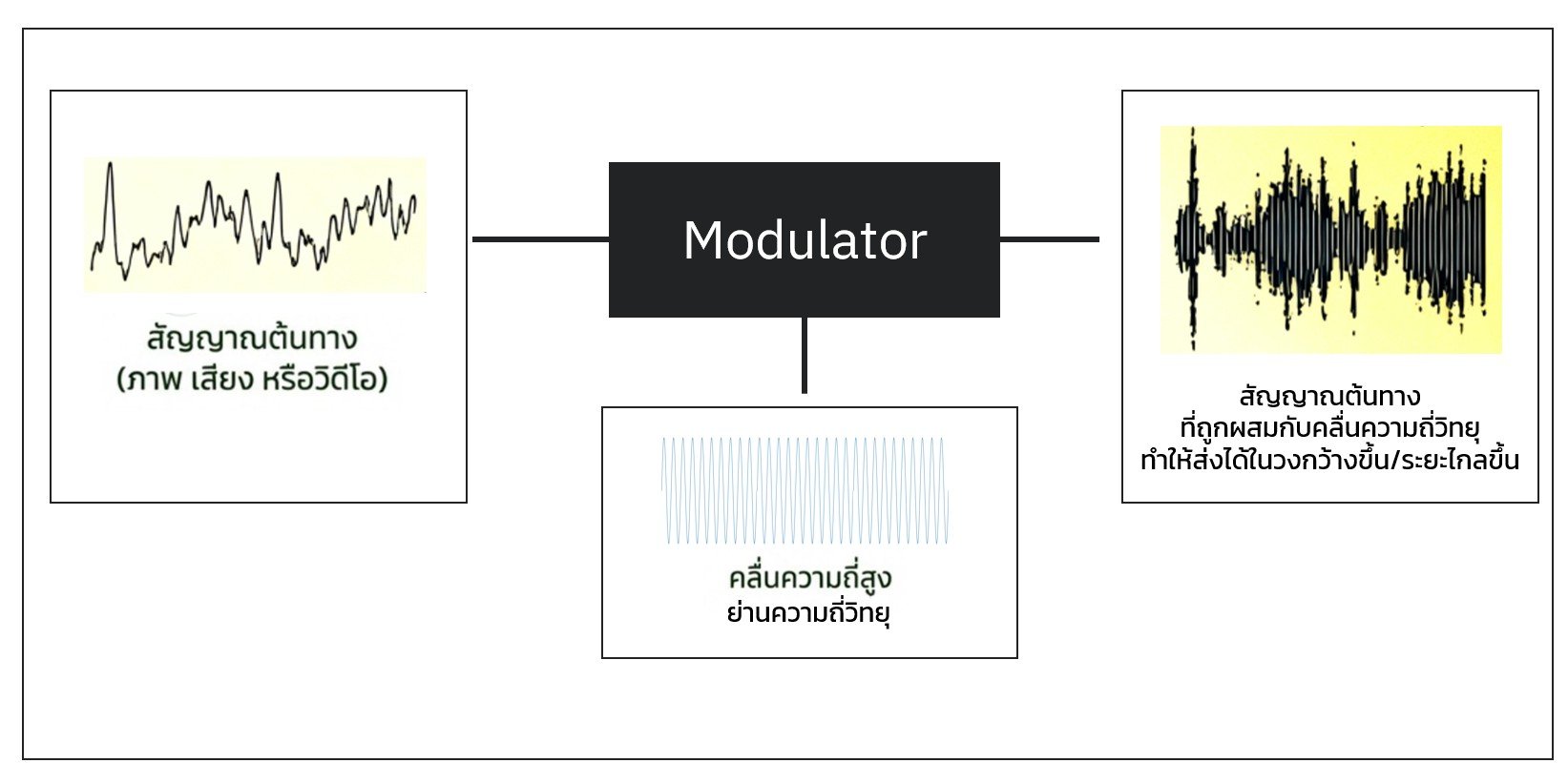
A modulator is a device that combines video, image, audio, and various types of data signals with a high-frequency signal, allowing them to be transmitted over cables or through the air over long distances.
In more detail, a modulator is a communication system device that converts and combines data signals such as video, audio, or digital data with a high-frequency signal known as a carrier signal, which is a radio frequency (RF). This process increases the signal frequency, enabling wider coverage and longer transmission distances through various media.
In system architecture, a modulator acts as an interface device that receives signals from various sources and converts them into a format suitable for transmission systems. For example, if a video signal needs to be distributed as a TV signal in a MATV system, it is connected to a TV modulator to convert it into a television signal for distribution within the MATV system.
Modulators are widely used across all types of communication systems, including digital terrestrial television (Digital TV), centralized TV systems such as MATV, SMATV, CATV, IPTV, satellite communication systems, WiFi networks, internet systems, and mobile communication networks. All of these rely on modulators to combine signals with carrier waves for stable transmission, wide coverage, and efficient performance.
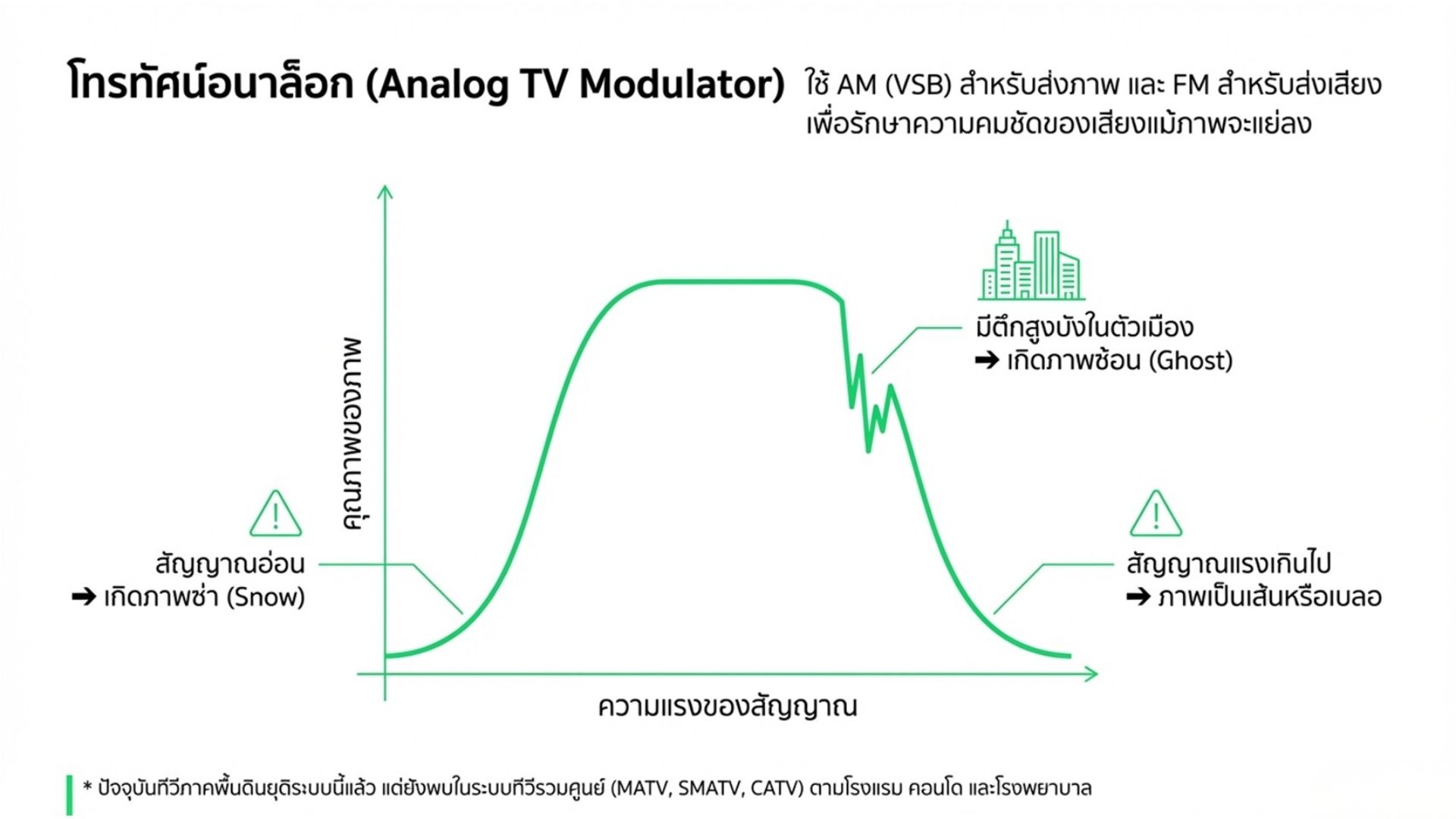
What is an Analog Modulator? An Analog Modulator is a device that combines video, audio, or image signals with a high-frequency carrier signal, allowing transmission over long distances. However, signal noise directly affects transmission quality.
- AM Radio uses Amplitude Modulation, which can transmit signals over long distances, especially at night. However, it is more susceptible to noise and has lower audio quality.
- FM Radio uses Frequency Modulation, offering clearer sound and better resistance to noise but covering a shorter range.
- Shortwave (SW) uses AM modulation, enabling long-distance international broadcasting, though signal quality may vary depending on atmospheric conditions.
- Analog TV uses Analog TV Modulators. Although terrestrial analog broadcasting has ended in Thailand, it is still used in systems like MATV, SMATV, and CATV in hotels, hospitals, and buildings.
Analog TV modulators use AM (VSB) for video and FM for audio. However, signal quality decreases depending on signal strength and environment, causing noise, blur, or ghosting effects.
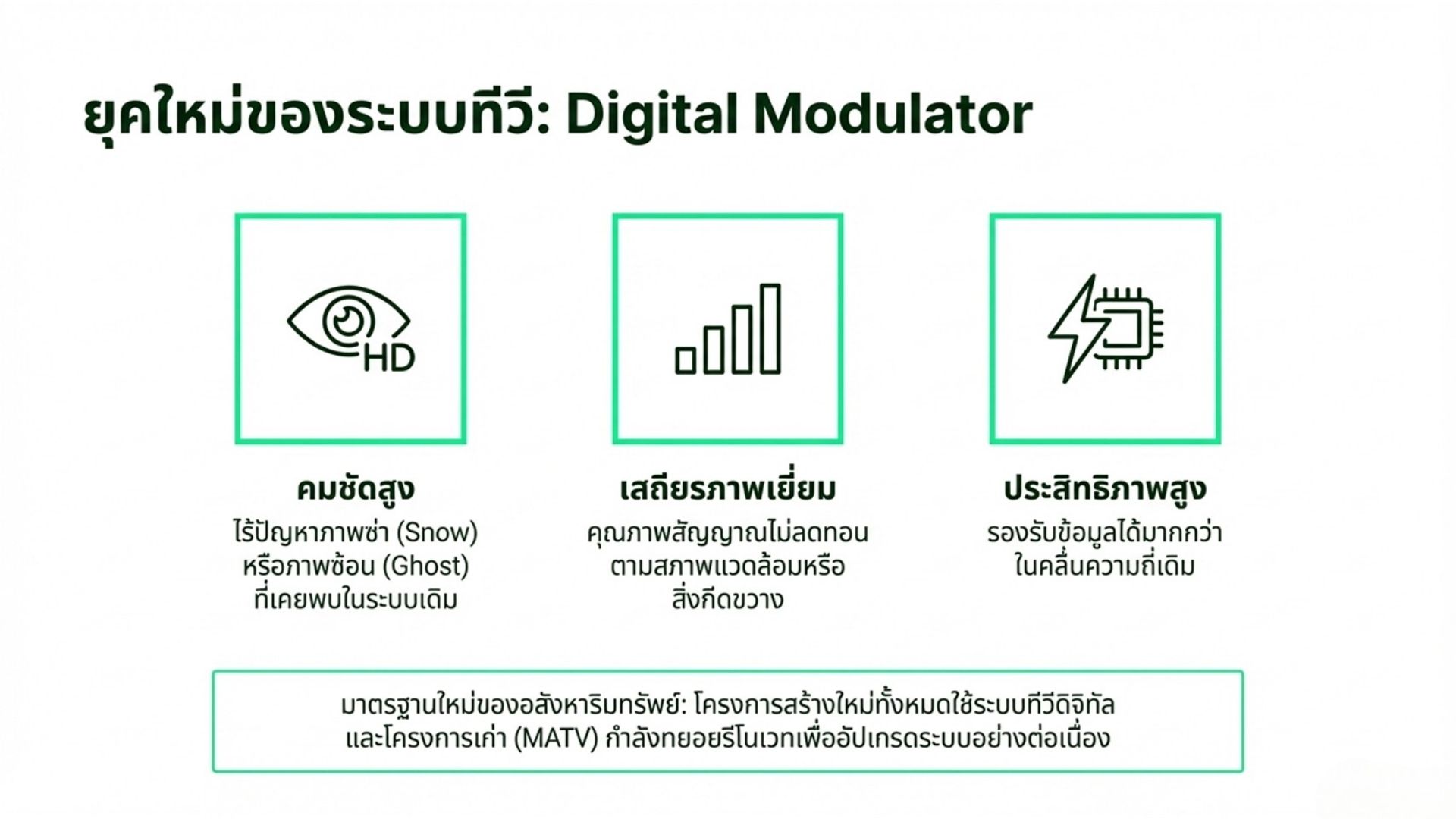
What is a Digital Modulator?
A Digital Modulator converts digital video and audio signals into radio frequency (RF) signals for broadcasting, based on standards such as DVB (Digital Video Broadcasting).
How Digital Modulators Work
Digital modulators process signals through encoding or transcoding, then combine them into a Transport Stream (TS) using multiplexing before modulating onto RF signals (DVB-T, DVB-C, etc.).
DVB Standards and Modulation Techniques
Digital modulators use different modulation techniques depending on transmission conditions:
- DVB-S / DVB-S2 (Satellite): QPSK, 8PSK, APSK
- DVB-T / DVB-T2 (Terrestrial): COFDM, QAM
- DVB-C / DVB-C2 (Cable): QAM
These standards ensure efficient, high-quality, and stable transmission in modern communication systems.